OnlyFake and the New Economics of AI Identity Fraud
AI identity fraud became easier to scale through OnlyFake. See how its fake document images challenged KYC checks and what the case leaves unresolved.
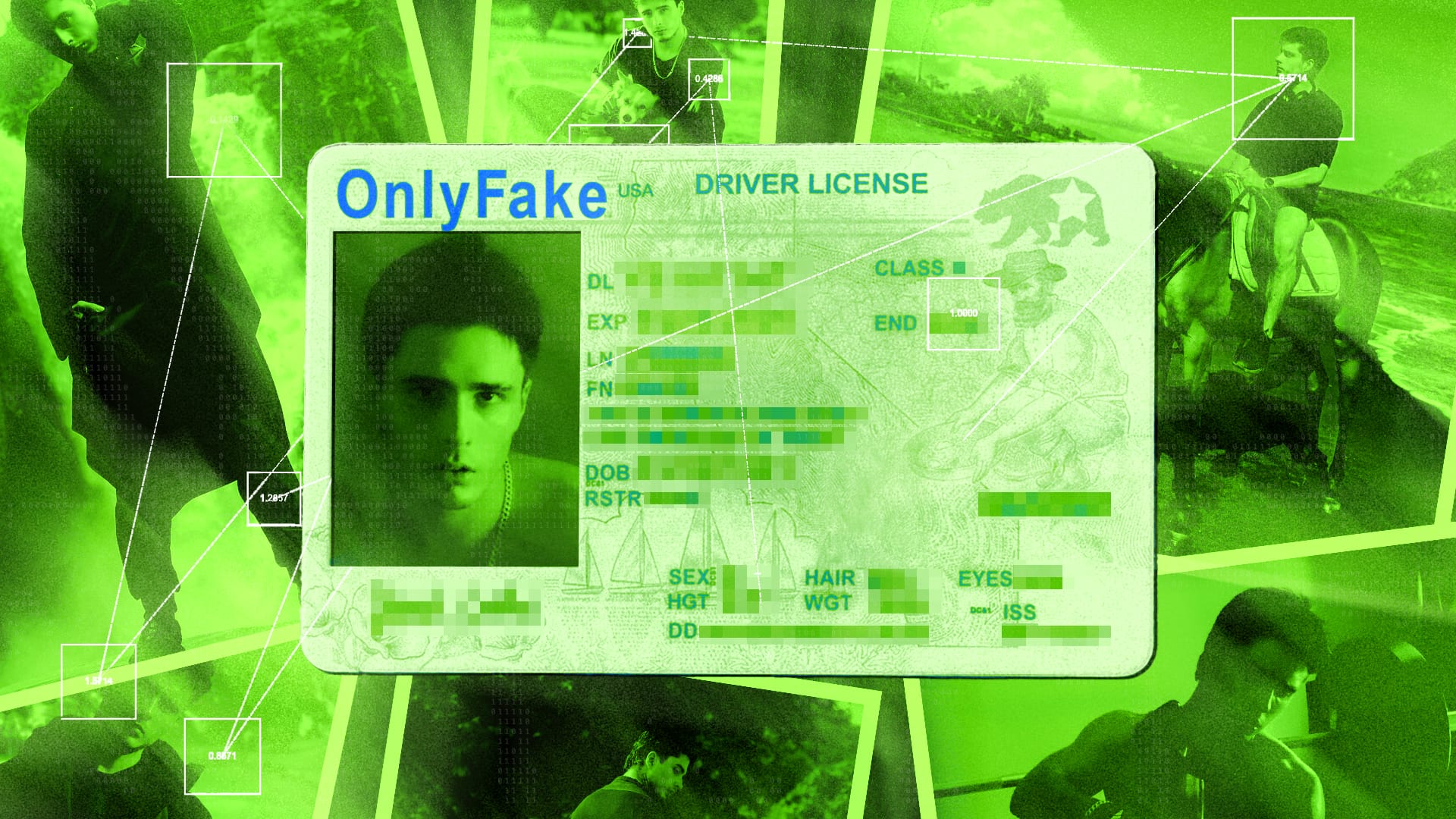
OnlyFake shows how AI identity fraud can turn painstakingly forged documents into a scalable service that challenges identity checks. The site’s creator, Yuriy Nazarenko, built it to automate fake IDs; according to 404 Media’s account, it later sold convincing document images for as little as $15 each.
- AI identity fraud became easier to scale through OnlyFake, which automated fake identity-document images.
- The service produced convincing-looking scans and staged photos of documents, including passports and driver’s licenses.
- The case raises questions about how financial services verify identity when both human reviewers and automated checks can face fabricated documents.
What changed
OnlyFake moved identity-document forgery from a specialist’s painstaking craft toward an automated online service. Its creator, Yuriy Nazarenko, described first spending long stretches editing passport scans by hand, adjusting details such as machine-readable text, portraits, and document dimensions.
He then built templates and a website that filled in documents using customer-supplied personal data. After generative AI became widely available, Nazarenko incorporated it into the operation, according to 404 Media’s reporting. The result was a service designed to produce not only scans, but images that made fake documents appear to have been photographed in everyday settings.
That presentation mattered. A document image placed on a desk or sofa could look more like a casual phone photo than a clean digital file, giving the output another way to imitate the evidence a business might request during verification. The documents and identities depicted were fabricated, but the images were designed to appear plausible.
404 Media reports that OnlyFake could produce fake IDs at scale, including hundreds or thousands at a time, and that the U.S. Department of Justice said it generated more than a million dollars in sales. The source says documents cost $15 each. It also reports that Nazarenko pleaded guilty, served a year in prison, and was free at the time of the interview.
Why it matters
Know-your-customer checks depend on businesses establishing who is using their services. The source describes how convincing fake identity documents can be used to attempt to open bank accounts, pass checks at cryptocurrency exchanges, or rent property while concealing a real identity.
OnlyFake’s significance, as presented in the reporting, is not simply that it made a forged document. It reduced the amount of specialist manual work needed to create one, potentially making the process accessible to people who could not produce convincing fakes themselves. That raises a practical challenge for services that rely on document images as evidence.
Both human reviewers and automated systems may inspect identity documents for inconsistencies, the source notes. Yet the account offers no measurement of how often OnlyFake’s output passed checks, or how any particular company responded. The supported takeaway is narrower: a service that can generate realistic-looking documents puts pressure on verification approaches that treat a submitted image as trustworthy.
There is also a broader AI angle for readers tracking the technology’s misuse. The account describes automation and generative AI as additions to an existing forgery workflow, not as a standalone tool that independently created the entire operation. That distinction matters: the risk came from combining document templates, customer data, image generation, and a service that could handle volume.
Who is affected
Financial institutions and cryptocurrency exchanges are among the organizations directly implicated by the uses described in the source. Businesses that rely on identity checks to establish who is opening an account or conducting a transaction also face the general verification problem highlighted by the case.
People whose personal information or identities are misused may also be affected. The source explains that fake documents could use bogus names or another person’s identity, although it does not quantify the number of victims or describe specific losses.
The case also matters to people building or evaluating AI systems. It illustrates how a capability intended to make image creation easier can be incorporated into a harmful service when combined with a specific workflow and commercial distribution. The account does not establish that every AI image tool creates this risk; it documents one operation and the way its creator adapted it.
For readers in India, the supplied reporting provides no country-specific evidence about local use, affected companies, or regulatory responses. The relevant reader angle is therefore the general one: any service that depends on digital identity documents has reason to consider whether its checks assess more than the apparent realism of an image.
What to watch next
The source says OnlyFake spawned copycats and that the FBI later pursued Nazarenko and shut down some competitors. That makes enforcement and imitation important parts of the story: taking down one service does not, by itself, establish whether similar operations have disappeared.
Readers should watch for further information about how identity-verification providers respond to realistic document images. The supplied account does not describe specific countermeasures, so it cannot show which techniques work or whether they prevent fraud. Any claims about solutions should be treated as unsettled until supported by reporting or evidence.
Another open question is how the case develops beyond the details in this account. 404 Media reports on Nazarenko’s interview, his guilty plea, and the service’s reported sales, but the supplied text does not give a current assessment of copycat activity or the wider scale of AI-enabled identity fraud. The distinction between documented facts and broader concern is important when judging the case.
TechnoRapper’s editorial desk used 404 Media’s account as the source for the reported history, uses, and legal details of OnlyFake; no independent investigation or verification is claimed here. For a related explanation of the service’s identity-fraud implications, see AI identity fraud and how OnlyFake scaled it.
Frequently asked questions
What was OnlyFake?
OnlyFake was an underground website created by Yuriy Nazarenko to generate fake identity-document images. According to 404 Media, it produced scans and staged-looking photos of documents such as passports and driver’s licenses.
How did OnlyFake use AI?
Nazarenko first automated document creation with templates and a website that inserted customer-supplied data. He later incorporated generative AI into the service, the source reports, but it does not specify the exact models or technical methods involved.
Why did OnlyFake concern identity-verification systems?
The service aimed to make fabricated documents look convincing to human reviewers and automated checks. The source says such documents could be used in attempts to access financial services, but it does not report a success rate for bypassing verification.
Related on TechnoRapper
- AI identity fraud and how OnlyFake scaled it
- X Echo Chamber: Why Online Political Memes Failed to Read the Midterms
- Great Unconformity: How Earth’s Missing Rock Record Took Shape
Source: 404 Media
How we used the source: facts, quotes, and numbers below come only from that link. We added structure, search intent, and reader context. We did not independently verify the reporting.
Permanent link · https://technorapper.com/2026/11/ai-identity-fraud-2/