Treasury CIO Legatum: Treasury CIO’s Legatum Updates Collided With a FinCEN
Treasury CIO Sam Corcos kept updating Legatum as FinCEN reported unauthorized access and service disruption. Here is what is confirmed—and what is not.
AI summary
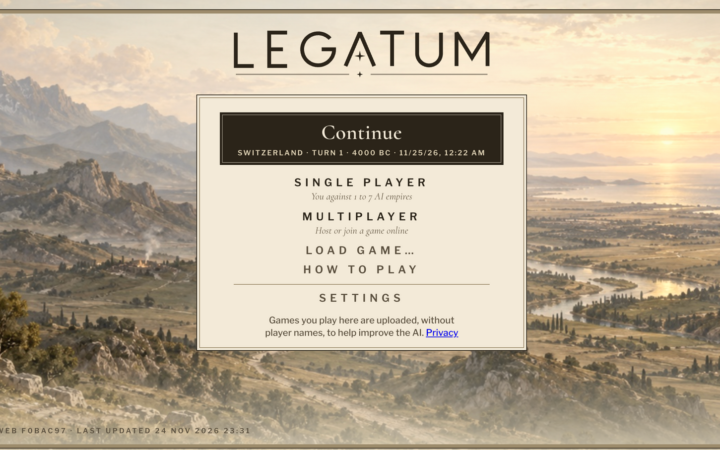
404 Media reports that Corcos pushed game updates as the Financial Crimes Enforcement Network investigated unauthorized access and took some systems offline. Legatum is an open-source browser game built largely with AI coding agents, while FinCEN said the disruption affected a limited subset of systems and extended filing deadlines for affected users.
Treasury CIO Legatum — Treasury CIO Sam Corcos continued updating his AI-built strategy game Legatum while FinCEN reported a cybersecurity incident that disrupted some of its systems, raising questions about attention
- Treasury CIO Legatum updates continued during a FinCEN cybersecurity disruption, according to 404 Media’s review of public game-development activity.
- FinCEN said unauthorized access affected a limited subset of its systems, prompting some services to go offline and deadline extensions for affected filers.
- The reporting documents overlapping activity, not a connection between the game and the incident or proof that Corcos’s outside project affected incident response.
What changed: Treasury CIO Legatum activity during the outage
Sam Corcos, Treasury’s chief information officer, kept making changes to Legatum, an open-source turn-based strategy game he is developing with AI coding tools, while the department’s Financial Crimes Enforcement Network responded to a cybersecurity incident. The game is designed to run in a web browser and draws intentionally on the familiar city-building and hex-based strategy format of Civilization VI, according to its GitHub readme.
404 Media reported that Corcos directed updates through AI coding agents, including changes to factions, music, player-help text and graphical details. The article cites public GitHub commits and prompts attributed to Corcos; it does not describe an independent examination of Treasury work schedules or the government’s incident-response process.
FinCEN’s public notice said unauthorized access affected a limited subset of its systems and that some systems were taken offline as a precaution. The agency also said it was extending deadlines for filers affected by the disruption. The source does not identify the affected systems in enough detail to determine precisely which filing tasks or users were impacted.
Why it matters
The relevant stake is the reliability of a government service used for Bank Secrecy Act compliance reporting. When a system needed for required filings becomes unavailable, affected filers may face operational disruption; FinCEN’s stated deadline extensions acknowledge that practical consequence.
Corcos’s role makes the timing newsworthy: the source identifies him as Treasury’s CIO and says his department is responsible for the department’s cybersecurity. Still, the reporting supports a question about competing attention and public accountability, not a conclusion that game development caused the incident, delayed recovery or diverted specific security staff.
Analysis: Public code updates can show what a person is doing on a separate project, but they cannot by themselves establish how that person allocated official working hours or performed incident duties. Readers should keep those evidentiary limits in view when weighing the juxtaposition.
Who is affected
Bank Secrecy Act filers whose work depended on the disrupted FinCEN systems are the most direct group affected. The agency said it was extending deadlines for filers impacted by the disruption, but the supplied reporting does not specify the revised deadlines or list the affected filing categories.
Treasury personnel and the public also have an interest in clear responsibility for cybersecurity and continuity of service. The source says Corcos became CIO as a DOGE hire and had also worked on General Services Administration projects, including Login.gov; it does not establish that those projects were involved in this FinCEN incident.
Legatum players are affected only in the ordinary sense that the game continued receiving updates. The source describes additions such as faction-specific music and game-balance changes, but offers no evidence that the project shares systems or resources with FinCEN.
What to watch next
The first practical question is whether FinCEN restores the affected services and clarifies which filing deadlines apply. Its notice, as quoted by 404 Media, said the agency was working to return systems to normal operations, but the supplied source does not provide a final recovery update or a detailed account of the incident.
Readers should also watch for confirmed information about the scope and cause of the unauthorized access. The source reports the agency’s description of the incident but does not name an attacker, explain how access occurred or say whether data was viewed or taken.
Separately, any further scrutiny of Corcos’s public game-development activity would need evidence about official responsibilities and work arrangements before supporting claims about job performance. The Treasury Department did not respond to 404 Media’s request for comment, according to the report, so the article does not include the department’s account of the overlap.
Frequently asked questions
What is Legatum?
Legatum is an open-source, browser-playable turn-based strategy game developed by Corcos with AI coding agents. Its readme describes it as intentionally similar in broad gameplay terms to Civilization VI, while stating that it is not affiliated with or derived from that game.
What did FinCEN say was disrupted?
FinCEN said unauthorized access affected a limited subset of its systems and that it took some systems offline as a precaution. The supplied report does not identify every affected service or explain the access method.
Did the source prove Corcos’s game work caused the FinCEN incident?
No. 404 Media described game updates appearing during the period of the disruption, but it did not report evidence connecting Legatum or its development to the unauthorized access. The timing raises questions about public accountability, not proof of causation.
TechnoRapper’s editorial desk used 404 Media’s reporting on FinCEN’s notice and public Legatum development activity as the basis for this account; the article distinguishes reported facts from questions the source leaves unanswered.
Related on TechnoRapper
- Rings of Power Season 4 Moves Into Pre-Production for 2027 Filming
- MCU X-Men era: Marvel’s X-Men Era Takes Shape After Secret Wars
- Russia’s Reported Orbital Nuclear Weapon Raises Satellite Risks
- Meta net-zero goal: Meta’s AI Expansion Puts Its 2030 Net-Zero Target Under
- Blade Runner 2099 reviews: Blade Runner 2099 Sets a New Franchise Low for
Inspired by: 404 Media
How we used the source: facts, quotes, and numbers in this article come only from that Inspired by link. We added structure, search intent, and reader context. We did not independently verify the reporting.
Permanent link · https://technorapper.com/2026/11/treasury-cio-legatum/