NVIDIA RTX Spark desktops bring local AI to compact Windows PCs
RTX Spark desktops from ASUS, Dell and MSI bring local AI to compact Windows PCs, with up to 128GB of memory and new creative software support.
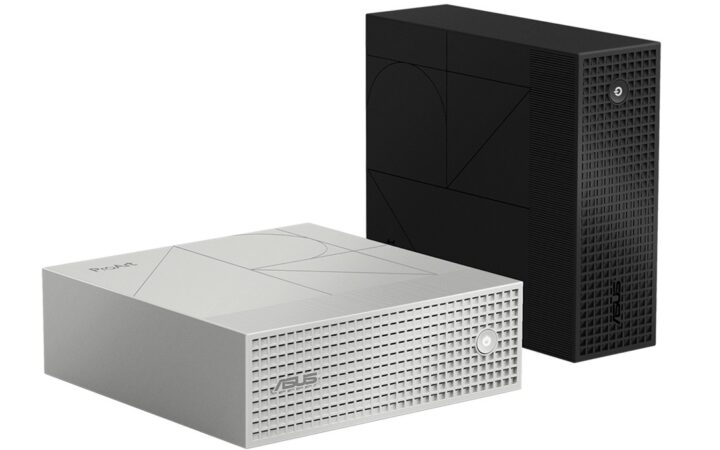
NVIDIA RTX Spark desktops are now available from ASUS, Dell and MSI, giving creators and developers a compact Windows PC for running supported AI models locally.
Key takeaways
- RTX Spark desktops bring local AI to compact PCs, with up to 128GB of unified memory for supported models and creative workloads.
- ASUS, Dell and MSI systems are available now; Acer, GIGABYTE and HP mini PCs and a Microsoft Surface RTX Spark Dev Box are still to come.
- New software support spans Adobe apps, ComfyUI, Blender and Windows ML, though availability and performance can vary by application and workflow.
What changed: RTX Spark desktops arrive for local AI
NVIDIA’s RTX Spark desktops are now on sale through ASUS, Dell and MSI. These compact Windows systems are designed to keep supported AI models and agents on a dedicated PC, alongside tools for image and video generation, model fine-tuning, creative work and development.
NVIDIA lists a 20-core Grace CPU, a Blackwell RTX GPU with 6,144 CUDA cores and up to 128GB of unified memory among the system specifications. It also claims up to one petaflop of AI performance and includes 10-gigabit Ethernet for moving large datasets and creative files across a network.
The company says the hardware can support local use of models as large as 120 billion parameters, real-time work with 90GB-plus 3D scenes and smooth editing of 4:2:2 video. Those are NVIDIA’s stated capabilities, not independent test results; actual performance will depend on the model, application and particular system configuration.
The desktop launch sits within a wider RTX Spark software push. NVIDIA describes the systems as companions to its RTX Spark laptops, while naming Acer, GIGABYTE and HP mini PCs and a Microsoft Surface RTX Spark Dev Box as upcoming options. The supplied announcement does not give release dates for those future devices.
Why it matters: Local AI can change the workflow
A dedicated desktop offers a practical alternative to running every AI task through a cloud service. NVIDIA says supported models can process code and files on the local PC, and local inference can avoid per-token API charges for those tasks. That does not mean every workflow stays offline: NVIDIA Switchyard can route work between local and cloud models, using cloud models for advanced reasoning.
For creators, the pitch is continuity as much as raw computing power. A desktop can keep agents, scheduled jobs, long renders or asset generation running while a laptop is being used elsewhere. NVIDIA also describes Hermes Agent workflows that connect Photoshop and ComfyUI, letting users direct creative steps with natural-language instructions.
The software changes matter because hardware capacity is useful only when applications can use it. NVIDIA highlights Windows on Arm support and GPU acceleration across Adobe tools, local generation in ComfyUI and a Blender viewport feature. TechnoRapper used NVIDIA’s announcement as the source for the product and software details here; its performance figures and workflow examples should be read as company claims.
Who is affected
Creators who edit video, work with RAW photos, build 3D scenes or generate images may find the combination of local AI and familiar applications relevant. NVIDIA says Premiere uses TensorRT-RTX for features including Enhance Speech, Object Mask, Scene Edit Detection and Auto Reframe, while Photoshop adds acceleration for its Remove Tool and native Camera Raw support on Arm-based RTX Spark systems.
Adobe Illustrator and InDesign now have native Windows on Arm versions, according to NVIDIA. The company says Illustrator can perform up to 30% faster than its emulated version, while Substance 3D Painter 12.2 has native Arm support in public beta. The gains and compatibility depend on the software version and work being done.
Developers and AI enthusiasts are another target group. NVIDIA points to CUDA, Linux development tools through Windows Subsystem for Linux, local agent setup with Hermes Agent or NVIDIA NemoClaw blueprints, and model fine-tuning with Unsloth. Readers weighing a local workstation against a cloud workflow can also see how NVIDIA’s DGX Spark cluster expands local compute for research.
Artists using Blender have a separate update to note: Blender 5.3 integrates DLSS 4.5 Ray Reconstruction into the Cycles viewport. NVIDIA says this can improve interactive previews of lighting, reflections and materials; support requires Blender 5.3 and a current NVIDIA Game Ready or Studio Driver.
What to watch next
First, watch for independent testing of the retail systems and for details on configurations, pricing and availability. The announcement names the vendors and headline specifications but does not provide prices or comparative benchmarks, so buyers should not assume every model delivers the same results.
Next, follow the rollout of the promised Acer, GIGABYTE and HP systems and the Surface RTX Spark Dev Box. NVIDIA’s announcement gives no firm timing for those products, leaving availability an open question for anyone waiting to compare more compact-PC options.
Software support is just as important as the hardware. Readers should check which features are released, in beta or dependent on specific drivers, and whether their preferred applications support the system’s Windows on Arm configuration. The source also describes Windows Server 2028 support for NVIDIA DGX Station and new Windows ML backends, but those are broader platform developments rather than features exclusive to the new desktops.
Analysis: RTX Spark’s central promise is a compact, always-ready machine that combines local AI with established creative software. Whether that is a better fit than cloud services will depend on a buyer’s need for local processing, ongoing workloads, application compatibility and willingness to invest in dedicated hardware; the supplied announcement does not establish a universal advantage.
Frequently asked questions
What is an NVIDIA RTX Spark desktop?
NVIDIA describes RTX Spark as a compact Windows desktop family for local AI, creative applications and development tools. The announced systems are from ASUS, Dell and MSI.
Can RTX Spark run AI models locally?
NVIDIA says the desktops support local model use and can run models up to 120 billion parameters. Actual performance depends on the model and system configuration, and some tasks may still use cloud models.
Which companies are making RTX Spark desktops?
ASUS, Dell and MSI systems are available now, according to NVIDIA. Acer, GIGABYTE and HP mini PCs and a Microsoft Surface RTX Spark Dev Box are listed as coming soon, with no dates provided.
Related on TechnoRapper
- DGX Spark cluster expands local compute for research
- Nvidia CEO Return Bid Stalls as Board Keeps Huang Review Open
- Slurm quantum integration: NVIDIA’s Slurm Update Simplifies Quantum Processor
- Google’s AI-free school search gap puts student choice in focus
- on-device scam detection: Google DeepMind’s Gemma Targets Scam Detection on
Inspired by: NVIDIA
How we used the source: facts, quotes, and numbers in this article come only from that Inspired by link. We added structure, search intent, and reader context. We did not independently verify the reporting.
Permanent link · https://technorapper.com/2026/11/rtx-spark-desktops/