Ring AI patrol cameras: Amazon’s Ring Rover and Drone Add AI-Guided Home
Ring AI patrol cameras will bring Amazon’s Rover robot and Drone Cam into homes and businesses. See how mapping works and what privacy questions remain.
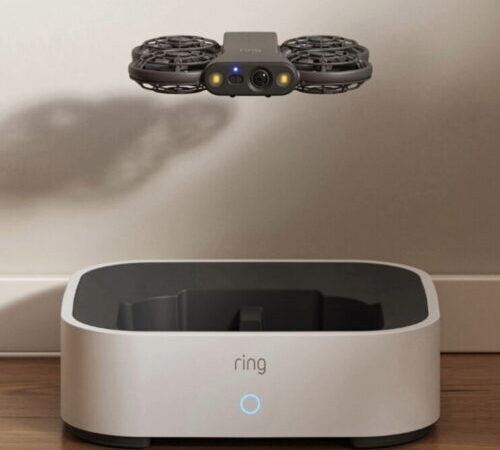
Ring AI patrol cameras — Amazon’s Ring Rover Cam and Ring Drone Cam are AI-powered security devices designed to patrol indoor spaces, with the Rover expected from the end of 2026 and the drone in early 2027. Their
Key takeaways
- Ring AI patrol cameras are Amazon’s upcoming Rover robot and Drone Cam, designed to move through indoor spaces.
- Amazon says an AI Pilot system will help both devices navigate, plan patrols and map a home or business.
- The Rover is expected at the end of 2026; the Drone Cam is expected in early 2027, and privacy concerns remain part of the story.
What changed
Amazon is extending Ring beyond stationary cameras with two products intended to move around indoor spaces: the Ring Rover Cam and Ring Drone Cam. The company’s announcement, posted November 10, describes both as relying on an AI Pilot system to plan patrol routes and avoid obstacles.
Amazon says the system combines camera input with specialized vision models, sensors on the devices and cloud processing. It is also used to digitally map the floor plan of a home or business, giving the products a layout to navigate during patrols.
The setup differs between the two devices. Customers carry the drone through the indoor areas they want it to map, while the Rover can explore autonomously, according to the announcement.
Amazon expects the Ring Rover Cam to reach customers starting at the end of 2026. The Ring Drone Cam is expected in early 2027, so the company has described a planned rollout rather than products already available to buyers.
Why it matters
Ring AI patrol cameras change the role of a home security camera: instead of watching only from a fixed position, these devices are designed to move through rooms. That could matter to customers who want a device to patrol more than one area, but the supplied announcement does not detail how well the products will perform or what their final capabilities will be in everyday use.
Movement and mapping also make privacy a central consideration. The devices use cameras to navigate and create a digital floor plan, while Amazon says their AI Pilot system includes both on-device sensors and cloud processing. The source does not explain how long maps or camera information are retained, or what controls customers will have over those records.
That uncertainty is especially relevant because mobile cameras can encounter more of a home or workplace than a fixed camera. Customers evaluating the products will need clear information about what the devices record, how their maps are handled and how patrol behavior can be controlled; those details are not provided in the announcement described here.
For readers following AI and connected-device privacy, these products sit at the intersection of automation and surveillance. TechnoRapper’s editorial desk used the Ars Technica report as the source for the product names, announced capabilities, setup process, timing and privacy context; details beyond that account remain unconfirmed here.
Who is affected
The most direct audience is Ring customers considering a mobile security device for a home or business. The Rover’s autonomous exploration and the drone’s customer-guided mapping process give buyers different setup experiences, even though Amazon says both use the same AI Pilot system.
People who share those indoor spaces are also relevant to the privacy discussion. A mapped floor plan and cameras that move around a property can affect more than the account holder, but the supplied source does not describe consent features or specific privacy settings for other occupants.
Businesses considering the devices face the same basic questions about indoor mapping and camera movement. The announcement names homes and businesses as possible environments, but does not specify business-focused functions or policies.
What to watch next
First, watch for more detail about the AI Pilot system. Amazon has identified the broad inputs—cameras, specialized vision models, on-device sensors and cloud processing—but the source does not explain how the system chooses routes or responds when it encounters an obstacle.
Privacy and control information will matter alongside the product rollout. Buyers should look for explanations of floor-plan storage, camera data handling, cloud processing and the ways customers can manage patrols, since the announcement summarized here does not answer those questions.
The announced schedule is another point to follow: Rover availability is expected to begin at the end of 2026, followed by the Drone Cam in early 2027. Those are expected timeframes, not confirmation that either product has shipped.
Readers weighing smart-device privacy more broadly can also consider how manufacturers describe data and user controls in other connected products, including Google’s Gemini smartglasses privacy features. That comparison does not establish how Ring will handle data; it highlights why clear product-specific information matters.
Frequently asked questions
What are Amazon’s Ring Rover Cam and Ring Drone Cam?
They are upcoming Ring security devices designed to patrol indoor spaces, one as a robot and one as a drone. Amazon says both use an AI Pilot system to navigate and plan routes.
How will the Ring devices map a home or business?
Amazon says both devices use AI Pilot to create a digital floor plan. Customers carry the drone through indoor areas during setup, while the Rover can explore autonomously.
When are the Ring Rover and Drone Cam expected?
Amazon expects the Rover Cam to reach customers starting at the end of 2026. The Drone Cam is expected in early 2027, according to the announcement described in the source report.
Related on TechnoRapper
- Google’s Gemini smartglasses privacy features
- Canva AI controls: Canva Adds a Switch to Disable Most Generative AI Tools
- School AI Gun Alert Lawsuit Puts False-Alarm Response Under Scrutiny
- Nvidia H200 China Sales Stop Despite US Approval
- TSMC AI investment: TSMC’s $1 Billion AI Investment Would Give It Stakes in
Inspired by: Ars Technica AI
How we used the source: facts, quotes, and numbers in this article come only from that Inspired by link. We added structure, search intent, and reader context. We did not independently verify the reporting.
Permanent link · https://technorapper.com/2026/11/ring-ai-patrol-cameras/