1.5°C warming threshold: Global Warming Outlook Now Puts the 1.5°C Limit in
Copernicus says the 1.5°C warming threshold could arrive by 2029, while Climate Action Tracker projects nearly 5°F of warming by 2100.
1.5°C warming threshold — A new Copernicus climate bulletin says global warming could pass the Paris Agreement’s 1.5°C benchmark as soon as 2029, much earlier than expected when the pact was adopted.
Key takeaways
- The 1.5°C warming threshold could be reached by 2029, according to the Copernicus climate service.
- Climate Action Tracker says current policies still point to nearly 5°F of warming by 2100.
- The reports underscore a widening gap between climate targets and the warming trajectory described by researchers.
What changed
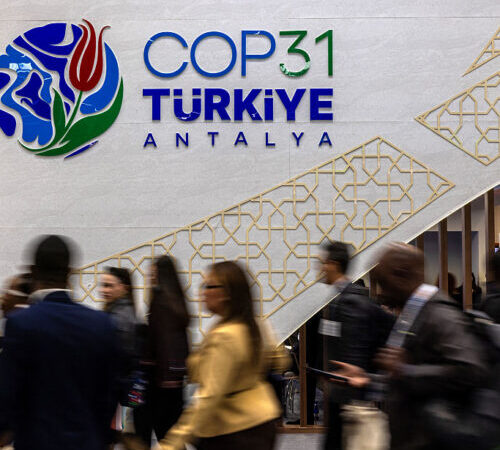
The 1.5°C limit is no longer projected to be a distant milestone. In a bulletin released during the United Nations COP31 climate conference, the European Union’s Copernicus climate change service said global warming could cross the Paris Agreement’s long-term threshold as soon as 2029.
That outlook contrasts with the projection made when countries adopted the agreement in 2015. At that point, the global average temperature was expected to exceed the threshold—2.7°F above the preindustrial average—around 2045. The new estimate brings that crossing forward by roughly 16 years.
The Copernicus bulletin also reported that warming has accelerated significantly since the agreement was adopted. The source document does not provide a detailed breakdown of that acceleration or specify how the service calculated the 2029 estimate, so the date should be understood as the report’s projection rather than a guaranteed point of arrival.
A separate assessment from Climate Action Tracker adds another measure of the challenge. The nonprofit group, which analyzes climate policies, found that the planet remains on course for nearly 5°F of warming by 2100 under current conditions described in its report.
Why it matters
The Paris threshold is a central reference point for efforts to limit climate change. A projection that places it within the next few years makes the distance between that goal and the reported trajectory harder to treat as a remote concern.
Climate Action Tracker linked the much higher end-of-century warming outlook with serious risks to coral reefs, agriculture, forests and the world’s ice. Those are the concrete stakes identified in the source; it does not quantify specific impacts on particular communities or industries.
Analysis: For readers following climate policy and technology, the contrast between a global target and the projected path matters because it puts the effectiveness of existing policies under scrutiny. The reports do not establish that any single technology or policy can change the outlook, but they make the gap between ambition and projected warming the key issue to follow.
The findings arrived amid upbeat green-technology messaging at COP31, according to the source. Their significance is not that a conference or a new report changes temperatures by itself, but that the assessment offers a stark counterpoint to optimistic public messaging.
Who is affected
The reports describe a global warming outlook, not a forecast limited to one country. Their implications therefore concern people and sectors exposed to the risks named by Climate Action Tracker, including agriculture, forests, coral reefs and regions dependent on ice.
People who follow climate negotiations also have a direct reason to pay attention. The 2029 projection puts a near-term date beside a long-term international threshold, while the separate 2100 estimate raises questions about whether the policies analyzed by Climate Action Tracker are sufficient to alter the broader trajectory.
The source does not name specific governments, companies or communities as responsible for the projections, nor does it describe local effects. Readers should avoid interpreting the global estimates as precise predictions for a particular place.
What to watch next
Watch for further details from Copernicus about the method and assumptions behind its estimate that warming could cross the threshold by 2029. The source reports the projection but does not include its underlying calculations, confidence range or a year-by-year temperature forecast.
Climate policy developments will also matter. Climate Action Tracker’s finding concerns the warming expected under the policy picture it assessed; changes to that picture could affect future outlooks, although the supplied report does not say how much any particular measure would change them.
Finally, watch how climate targets are discussed alongside the risks to ecosystems and sectors named in the assessment. The reports point to both a near-term threshold and a much higher long-range warming estimate, but they do not say that crossing the threshold is certain or describe what happens on a specific date.
Frequently asked questions
When could global warming pass the Paris Agreement’s 1.5°C threshold?
Copernicus says the threshold could be crossed as soon as 2029. The source presents this as a projection, not a certainty.
What did scientists expect when the Paris Agreement was adopted?
At the time, the global average temperature was projected to pass the threshold around 2045. Copernicus now puts the possible crossing as early as 2029.
What does Climate Action Tracker project for 2100?
The group says the planet remains on track for nearly 5°F of warming by 2100. It warns that this level would devastate coral reefs, disrupt agriculture and forests, and melt most of the world’s ice.
TechnoRapper’s editorial desk used the supplied Ars Technica report as the source for the climate projections and related context; the analysis above is labeled separately from those reported facts.
Related on TechnoRapper
- AWS Data Loss Puts Ukraine’s Cloud Resilience Lessons in Focus
- Starshield Speed Limit Raises Questions About Ukraine’s Drone Connectivity
- Google Gemini School Rollout Faces Calls for a Pause
- FAA Ground Stop Ends, but Flight Delays May Continue
- Amazon product index: Amazon’s World Product Graph Could Keep Product
Inspired by: Ars Technica
How we used the source: facts, quotes, and numbers in this article come only from that Inspired by link. We added structure, search intent, and reader context. We did not independently verify the reporting.
Permanent link · https://technorapper.com/2026/11/1-5c-warming-threshold/