Hyundai To Introduce 2 New SUVs In FY2027

Hyundai has confirmed that it will introduce two new SUVs in India during FY2027, including a new internal combustion engine SUV and an electric SUV. The announcement was made in the company’s FY26 investor presentation.
As part of the presentation, Hyundai said it will see the “launch of two completely new nameplates” aimed at expanding its SUV presence. “Of these new launches, one will strengthen our position in the mid-SUV segment while the other will mark the debut of our localised dedicated EV in the compact SUV space,” the company stated.
Also Read: Hyundai Ioniq 5 Facelift Launched At Rs 55.70 Lakh; Range Rises To 690 KM
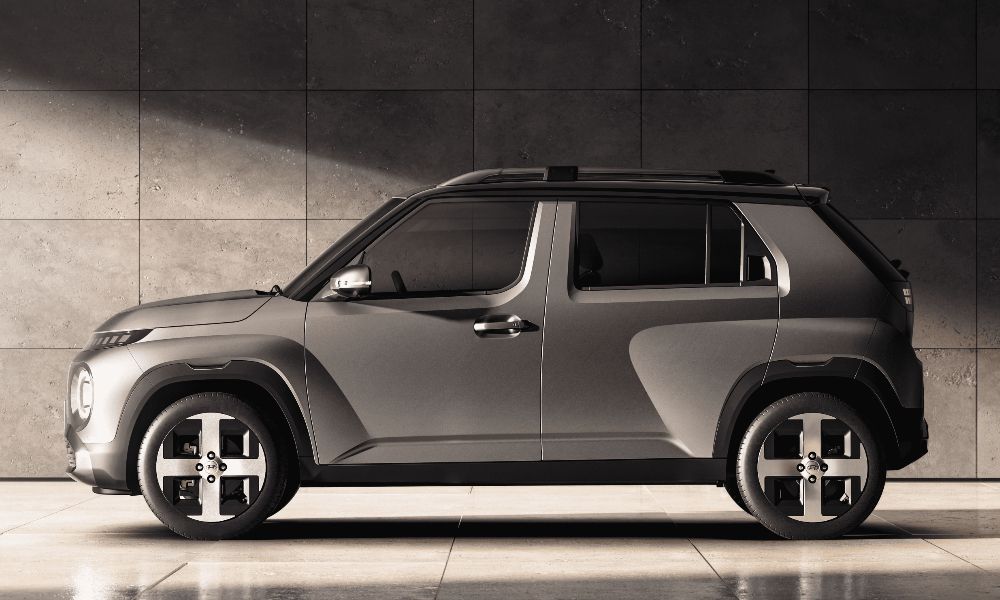
Hyundai had previously confirmed plans for a made-in-India sub-4-metre electric SUV during its Investor Day presentation in October 2025. A month later, the company described the upcoming EV as “the country’s first EV designed specifically for local drivers” with an “India-centric design and features.”
The upcoming electric SUV is expected to be based on the Hyundai-Kia K1 platform, which also underpins models like the Hyundai Inster sold in overseas markets. Unlike some of Hyundai’s existing EVs, the new model is likely to have a standalone identity rather than being an electric derivative of an existing ICE vehicle. It could also share some components and electrical architecture with the upcoming Kia Syros EV to help improve localisation and keep costs under control.
Also Read: Hyundai Ioniq 3 Electric Hatchback Revealed; Smallest Ioniq EV Offers Up To 496 km Range

As for the second SUV, Hyundai has not revealed any official details yet. However, reports suggest this could be the Bayon, an i20-based crossover that is already on sale in several international markets.
The fresh SUV push comes as Hyundai looks to strengthen its position in India’s increasingly competitive ‘SUV’ space. In FY2026, the South Korean carmaker slipped to fourth position in overall passenger vehicle sales rankings as competition from Tata Motors and Mahindra intensified across segments.