Starshield Speed Limit Raises Questions About Ukraine’s Drone Connectivity
Ukraine says Starshield again limits fast-moving military drones above 161 km/h in occupied areas. Here is what the claim means and what remains unclear.
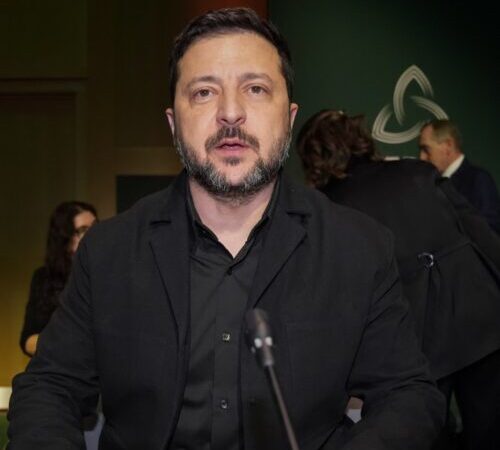
Starshield speed limit — Starshield connectivity is reportedly restricted again for Ukrainian drones traveling faster than 161 kilometers per hour, according to a statement by Ukraine’s president.
- Starshield speed limits reportedly prevent Ukrainian drones from using the service above 161 kilometers per hour in occupied areas.
- President Volodymyr Zelenskyy said the United States provided “very little” information about the renewed restriction.
- The account in the source is an allegation from Ukraine; the supplied text does not include SpaceX’s response or independent confirmation.
What changed
Ukraine’s president says Starshield has again stopped working on Ukrainian military drones when they exceed 161 kilometers per hour in parts of the country occupied by Russian forces. That threshold is equivalent to 100 miles per hour, according to his remarks.
Volodymyr Zelenskyy described the restriction in a speech at the 9th European Political Community Summit in Ireland. He said the speed limit had returned and that Ukraine had received very little information from the United States about the change.
Starshield is the military variant of SpaceX’s Starlink satellite service. The supplied account connects the restriction specifically to fast-moving drones and Ukrainian territory under Russian occupation; it does not describe a general outage of Starlink or Starshield across Ukraine.
The TechnoRapper editorial desk used Ars Technica’s report as the source for the claims and context in this article. The available source text contains Zelenskyy’s account, but does not include SpaceX’s response or independent verification of the reported restriction.
Why it matters
Analysis: The reported limit matters because it could affect whether Ukrainian military drones can rely on Starshield while moving above the stated speed. If the restriction operates as Zelenskyy described, teams using those aircraft would need to account for a connectivity threshold during operations.
The disclosure also raises a question about how service restrictions are communicated when a satellite network supports military use. Zelenskyy’s complaint was not only about the speed ceiling: he also said Ukraine had received little information about its return.
The source does not explain why the restriction was applied, how it is enforced, or whether other Starshield capabilities are affected. Those gaps matter because a speed threshold alone does not show how often drones encounter it or what operational consequences follow.
Who is affected
Ukrainian military users of drones that travel faster than 161 kilometers per hour in the occupied areas described by Zelenskyy are the group most directly implicated. The source does not establish how many aircraft or missions are affected.
Other Starshield customers should not read the statement as evidence of a broad service disruption. The report concerns an alleged restriction on fast-moving Ukrainian drones, not a stated change to civilian Starlink service or all Starshield users.
For people following the war and satellite communications, the issue highlights how access to commercial space infrastructure can intersect with military operations. The supplied report, however, offers no details about the policy arrangements between Ukraine, the United States, and SpaceX.
What to watch next
The key question is whether SpaceX or US officials publicly address the reported speed ceiling and explain what has changed. The supplied source text does not provide their response, so the restriction’s rationale and scope remain unclear.
Readers should also look for confirmation of whether the 161-kilometer-per-hour threshold applies consistently, and whether it affects only drones in occupied territory or other circumstances. Zelenskyy’s statement identifies the claimed speed and location, but does not answer those operational questions.
Any further information should distinguish Starshield’s military service from Starlink’s broader satellite internet offering. Without that distinction, reports of a specific restriction on military drones could be mistaken for a wider connectivity outage.
Frequently asked questions
What is the reported Starshield speed limit for Ukrainian drones?
Zelenskyy said Starshield had again been restricted on Ukrainian military drones traveling faster than 161 kilometers per hour, or 100 miles per hour. The source presents this as Ukraine’s allegation.
Where does Ukraine say the restriction applies?
Zelenskyy referred to Ukrainian territory temporarily occupied by Russian forces. The supplied account does not establish whether the same limit applies elsewhere.
Has SpaceX explained why Starshield is restricted?
The supplied source text does not include an explanation from SpaceX or a response from the company. Zelenskyy said the United States had provided very little information about the restriction’s return.
Related on TechnoRapper
- Google Gemini School Rollout Faces Calls for a Pause
- FAA Ground Stop Ends, but Flight Delays May Continue
- Amazon product index: Amazon’s World Product Graph Could Keep Product
- OpenAI Launches ChatGPT Wallet for AI Agents, Enabling Purchases with Biometric Security
- CMF Speaker S Hits $39 as Its New Lowest Price
Inspired by: Ars Technica
How we used the source: facts, quotes, and numbers in this article come only from that Inspired by link. We added structure, search intent, and reader context. We did not independently verify the reporting.
Permanent link · https://technorapper.com/2026/11/starshield-speed-limit/