BMW F 450 GS Vs Honda NX500 Specifications Comparison
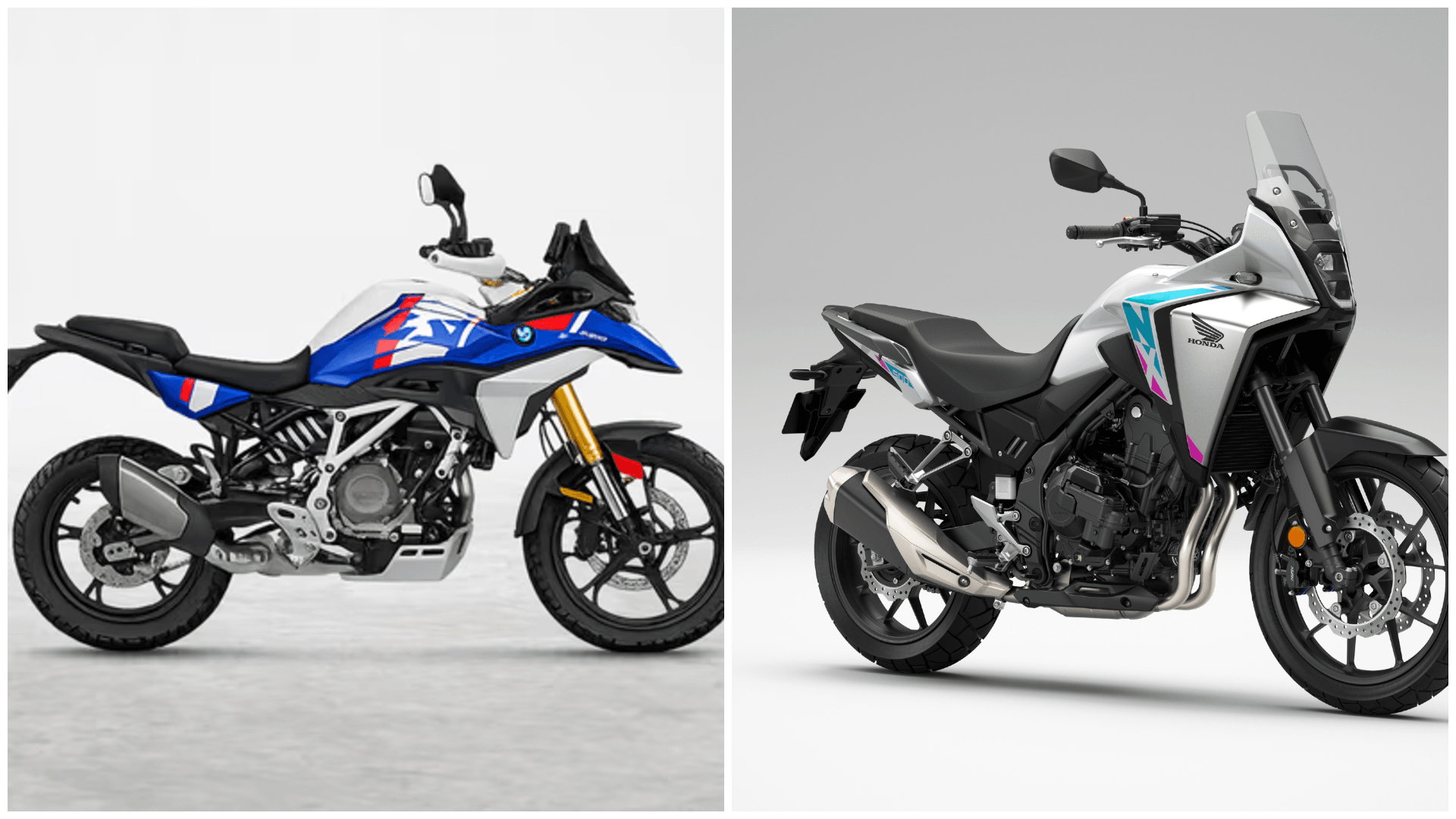
The BMW F 450 GS is the newest mid-size adventure motorcycle launched in India with a parallel-twin engine, and an automatic clutch on the top variant. Now, the Honda NX 500 has also been launched with an automatic clutch. Both bikes feature parallel-twin engines in roughly the same ballpark of engine displacement, with similar engine output. Here’s how the BMW F 450 GS and the Honda NX500 compare to each other.
Also Read: BMW F 450 GS First Ride Review
Also Read: Honda NX500 E-Clutch Launched At Rs. 7.44 Lakh
Engine Displacement & Performance Output
Both the F 450 GS and NX500 are powered by parallel-twin engines. The BMW F 450 GS gets a 420 cc, parallel-twin engine, while the Honda NX500 is powered by a 471 cc, parallel-twin engine. Both have similar power and torque output, and both are available with automatic clutch systems, but these are slightly different in technology and operation.
| BMW F 450 GS | Honda NX500 | |
| Engine | 420cc, parallel-twin | 471cc, parallel-twin |
| Maximum Power | 47 bhp @ 8,500 rpm | |
| Peak Torque | 43 Nm @ 6,500 rpm | |
| Transmission | 6-Speed |
Features & Tech
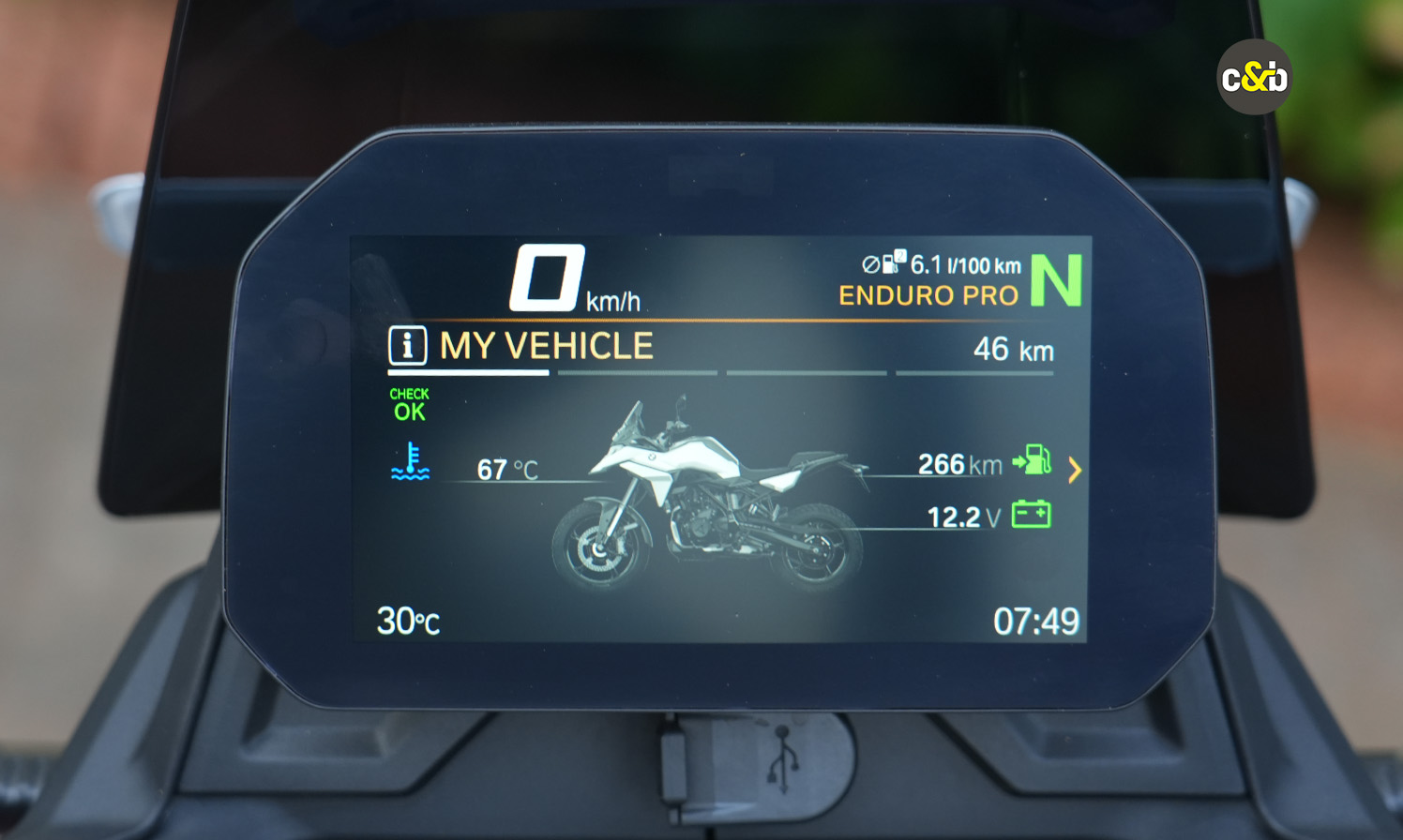
The BMW F 450 GS is offered in three variants in India – Base, Exclusive and Trophy. Even the base variant gets a long list of features, including a large 6.5-inch TFT display, multiple ride modes, traction control and ABS Pro. Higher variants also open up a quickshifter, an additional Enduro Pro mode, and the top-spec GS Trophy variant getting adjustable suspension and BMW’s Easy Ride Clutch. Heated grips are standard, but cruise control is not offered.
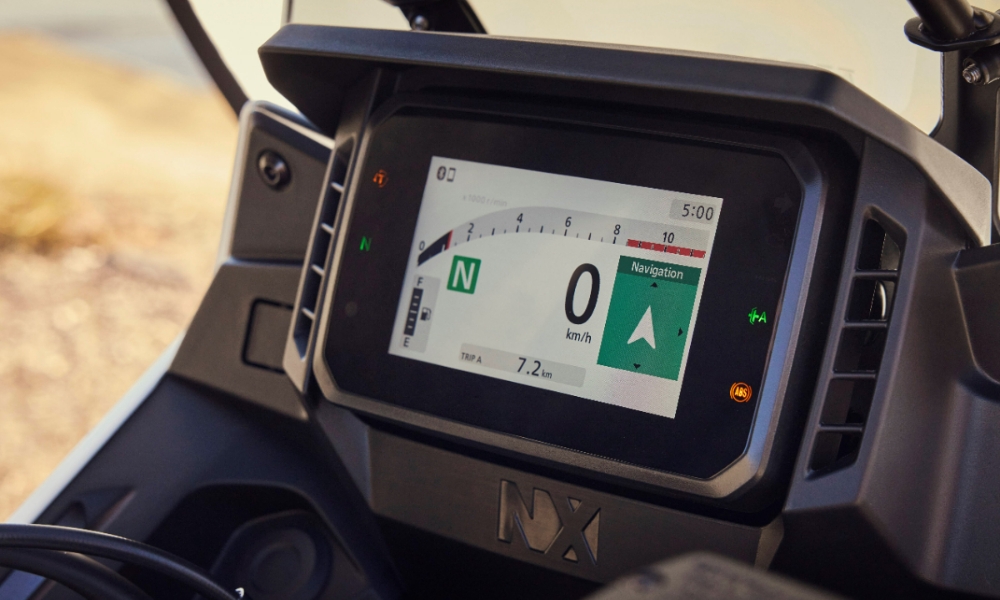
The Honda NX500 is offered in both manual and e-clutch variants, with the NX500 with e-clutch significantly more expensive than the BMW F 450 GS.
Automatic Clutch Differences
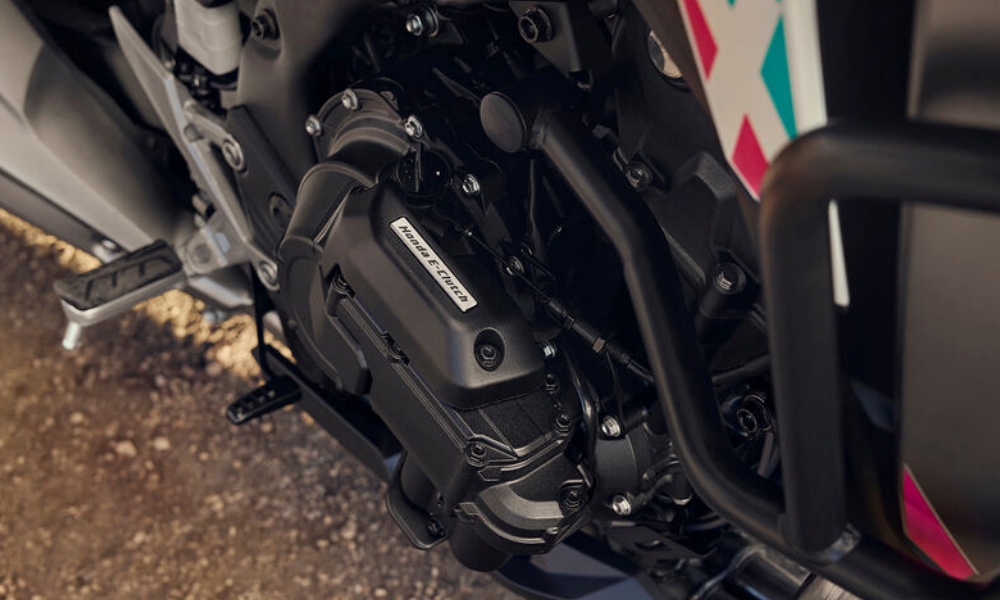
Both the BMW F 450 GS and Honda NX500 offer automatic clutches, but both differ in the technology and in the way they function and operate. The BMW’s Easy Ride Clutch is only available in the top-spec Trophy variant while the NX500’s E-Clutch can be switched off for full manual operation.
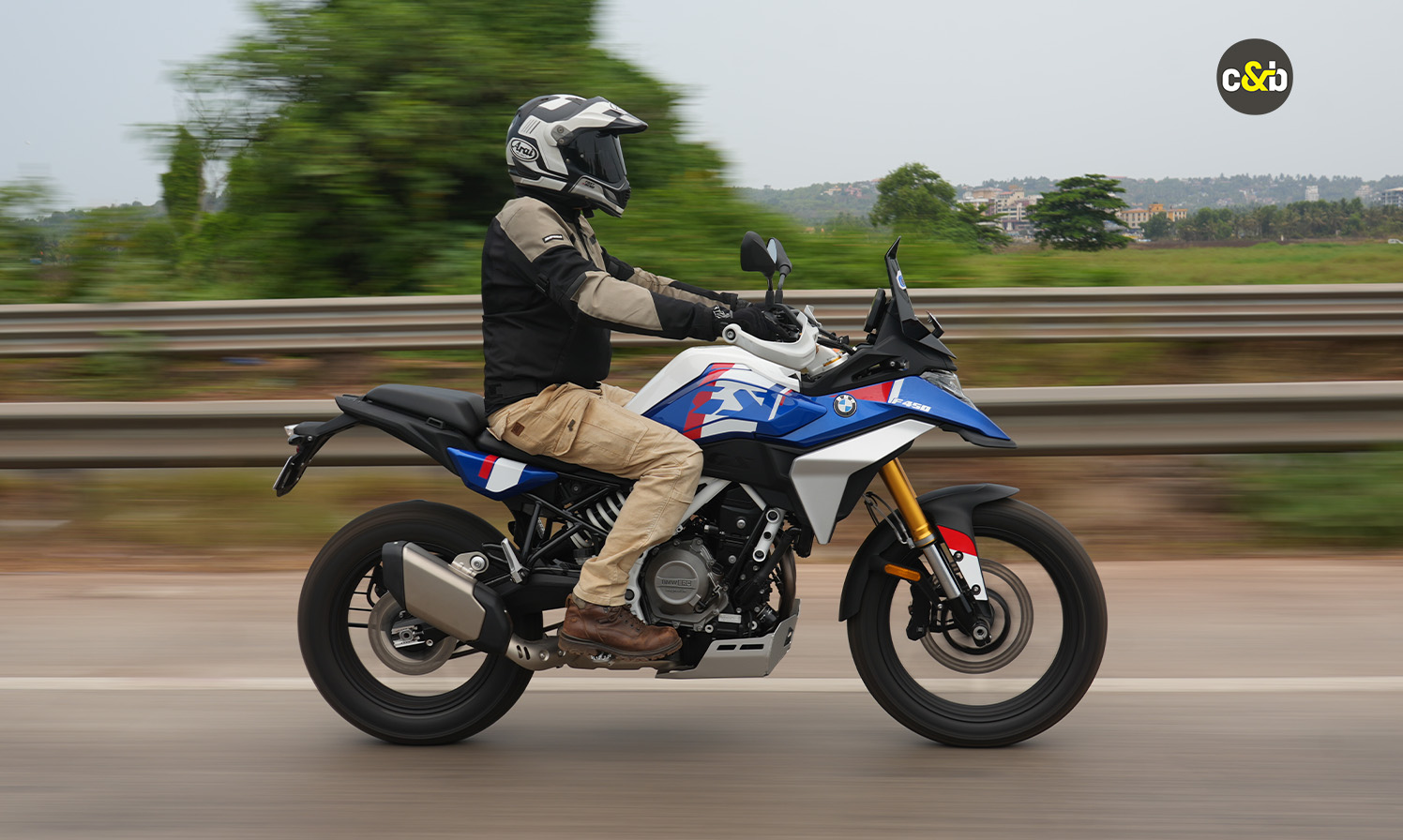
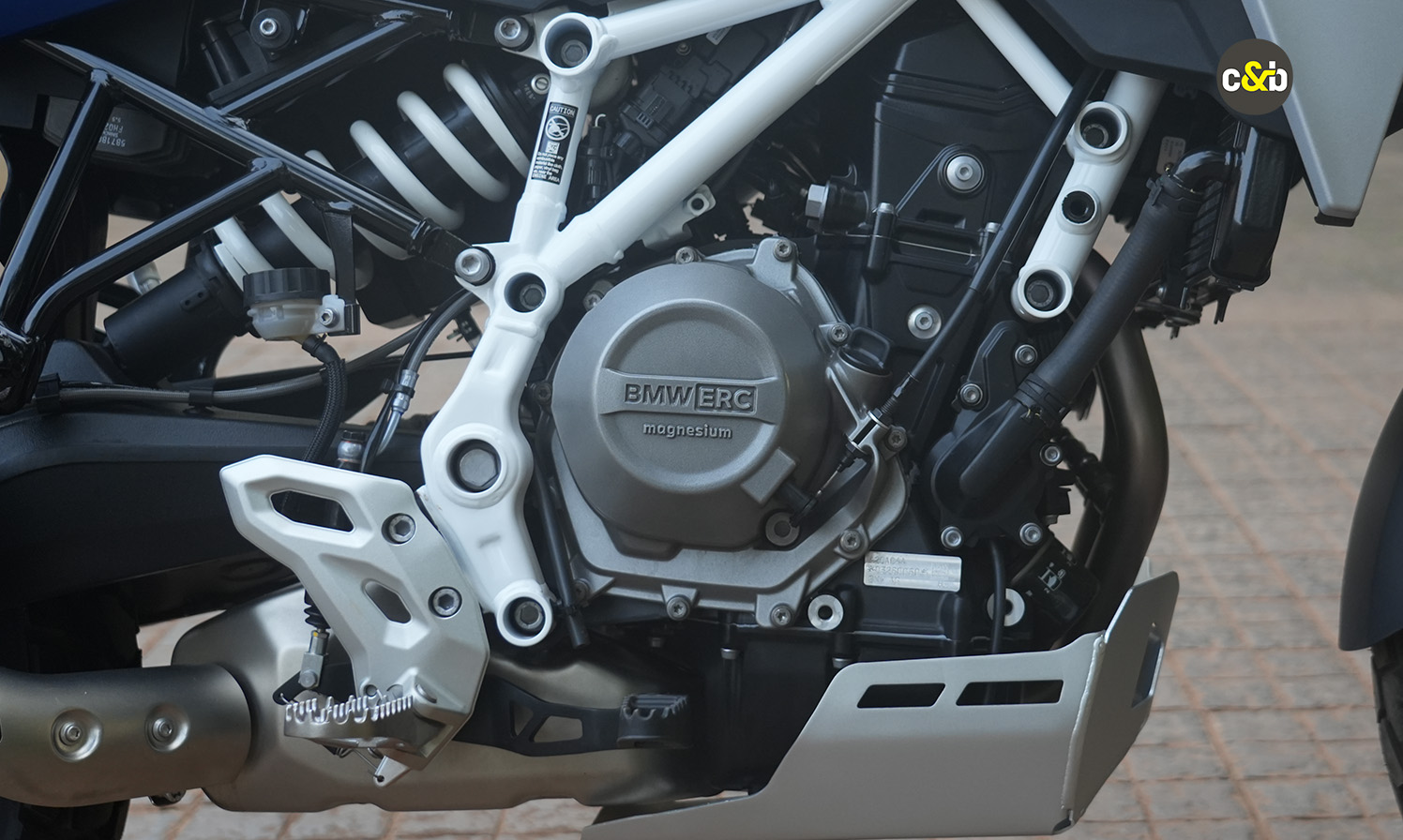
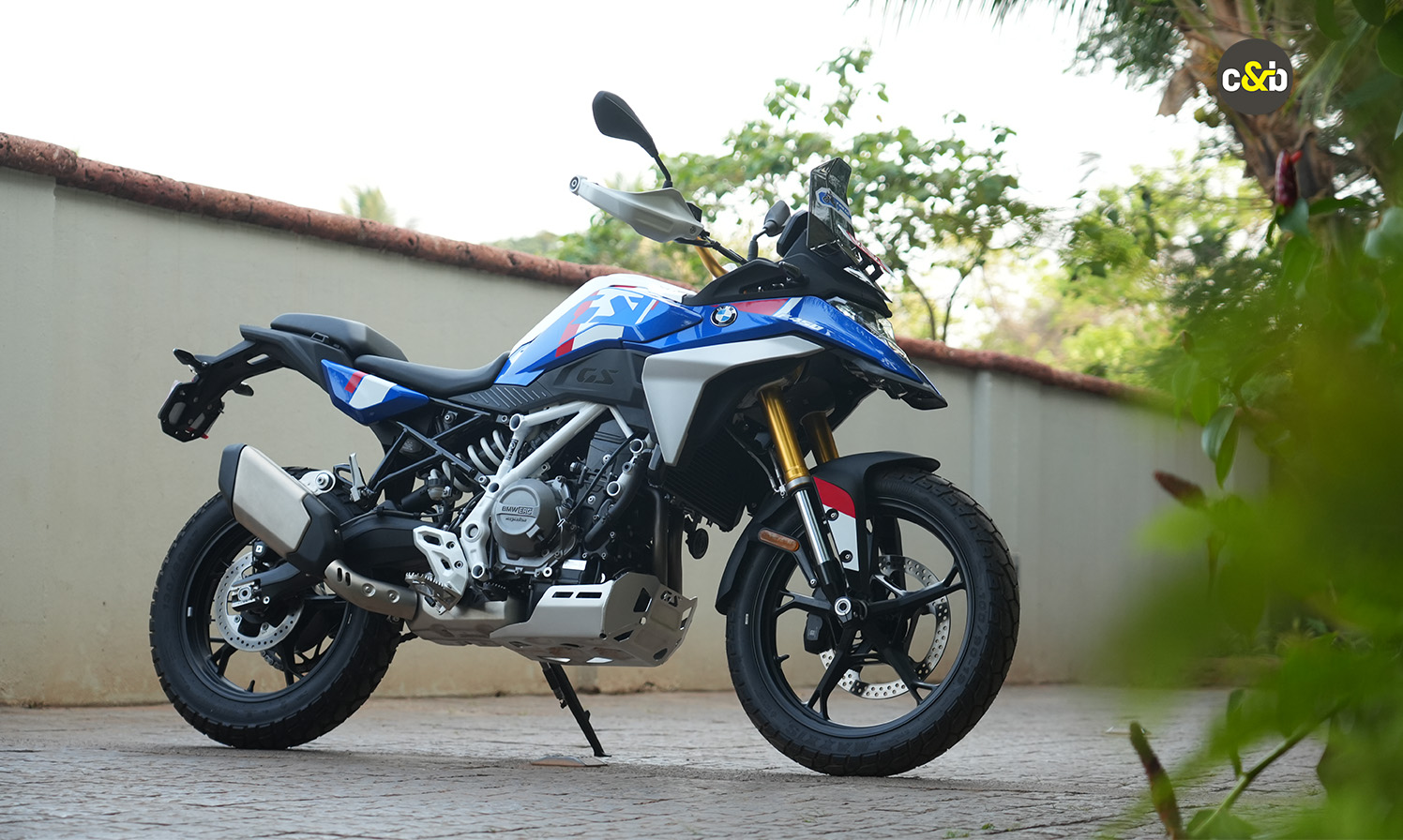
BMW’s Easy Ride Clutch (ERC) is essentially a mechanical system that combines a conventional multi-plate clutch with a centrifugal clutch. The ERC disengages at idle and engages as the revs rise, specifically beyond 2,700 rpm, But the rider will need to use the clutch lever when starting the motorcycle, and gears will need to be manually shifted. The physical clutch lever can be used at any time to over-ride the ERC, but the downside of the ERC is that on an incline the bike can freewheel if the engine is below engagement speed. It lacks the engine braking feel of a manual and can cause the bike to roll on an incline.
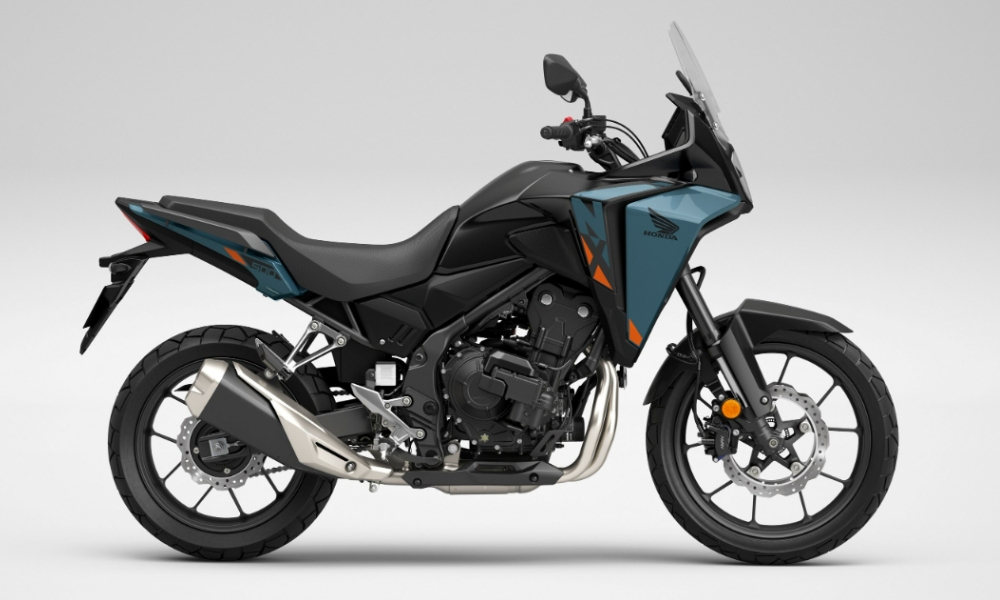
Honda’s E-Clutch is an electronic control technology that automates motorcycle clutch operation. It allows riders to start, stop and shift gears without touching the clutch lever. Unlike Honda’s fully-automatic dual clutch transmission (DCT) seen in the likes of the Africa Twin, the E-Clutch still requires the rider to manually select the gears with the foot shifter. However, it can be automatically switched off if the rider grabs the clutch lever offering full manual control. Alternatively, it can also be deactivated completely via the bike’s menu.
Dimensions
The BMW F 450 GS has a taller seat, more ground clearance but is significantly lighter than the Honda NX500. The Honda however gets a larger fuel tank, which will translate to more range – useful for an adventure touring motorcycle.
| BMW F 450 GS | Honda NX 500 | |
| Saddle Height | 845 mm | 830 mm |
| Ground Clearance | 220 mm | 181 mm |
| Kerb Weight | 178 kg | 199 kg |
| Fuel Tank Capacity | 14 Litres | 17.5 litres |
Chassis & Cycle Parts
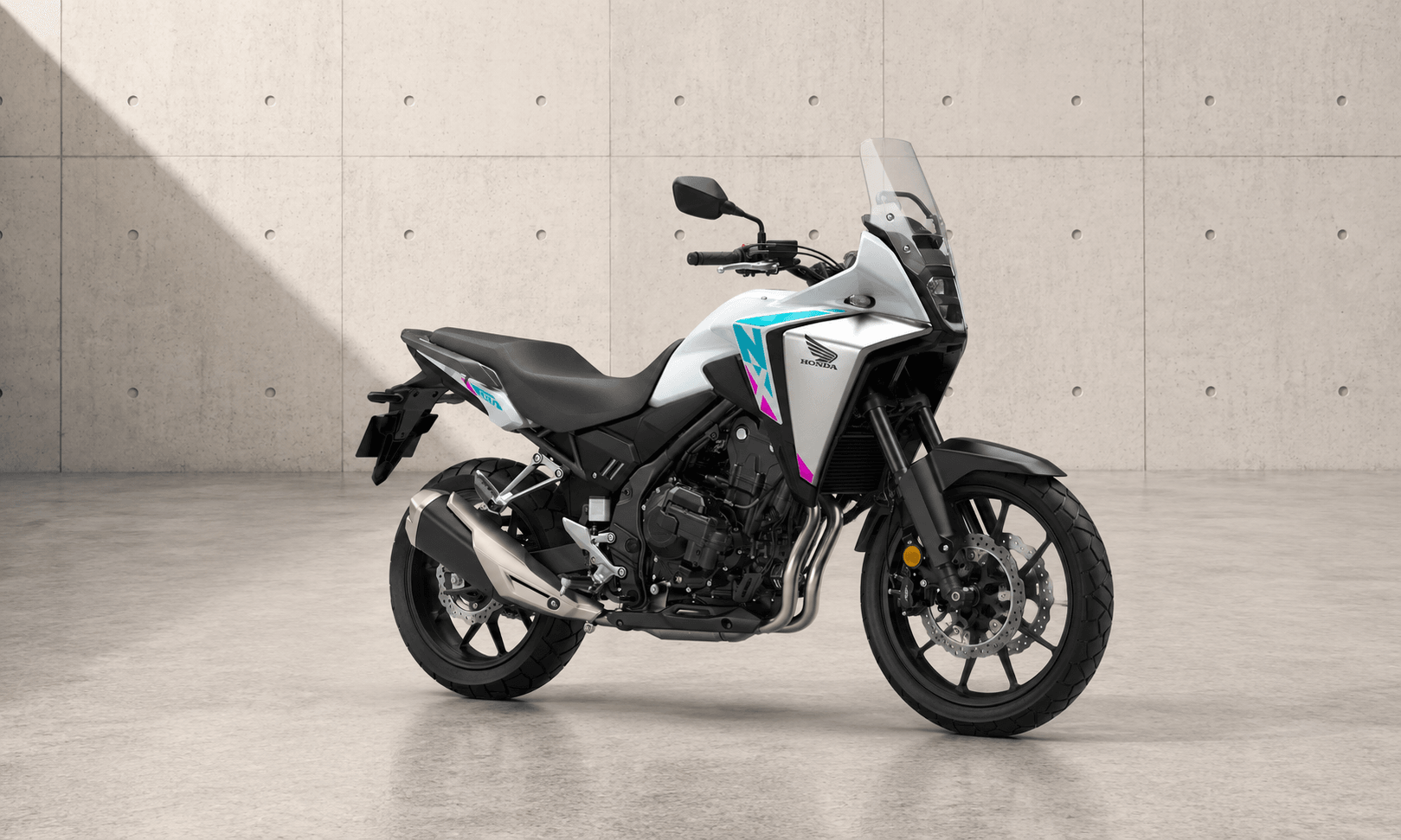
The BMW F 450 GS is built around a tubular steel trellis frame while the NX500 uses a diamond type frame. The BMW employs a 43 mm upside down fork and a central monoshock at the rear, with full adjustability in the Trophy variant. Suspension travel is 180 mm. The Honda NX500 also gets a 41 mm USD fork with 150 mm travel up front and 135 mm of travel from the Pro-Link single shock at the rear. Both bikes run on similar 19-inch front and 17-inch rear wheel combination with standard alloy wheels. The BMW offers optional wire spoke wheels, but the Honda just comes with cast alloys.
Price
While both the BMW F 450 GS and the Honda NX500 are mid-sized adventure bikes with parallel-twin engines, other notable rivals in the segment with single-cylinder engines cannot be ignored when it comes to choosing to buy the right adventure bike. The Honda NX500 is the most expensive option here, followed by the BMW F 450 GS.
| Variant | Price (Ex-showroom) |
| BMW F 450 GS Base | Rs. 4.7 Lakh |
| BMW F 450 GS Exclusive | Rs. 4.9 Lakh |
| BMW F 450 GS Trophy | Rs. 5.3 Lakh |
| Honda NX500 (Manual) | Rs. 6.33 Lakh |
| Honda NX500 (E-Clutch) | Rs. 7.44 Lakh |
Other Rivals
Other options with similar capability include the Royal Enfield Himalayan 450, priced from Rs. 3.05 – 3.37 lakh (Ex-showroom). The other option includes the KTM 390 Adventure S, priced at Rs. 3.97 lakh (Ex-showroom). The Himalayan 450 and the KTM 390 Adventure S also offer similar output numbers from their respective single-cylinder engines, and are more affordable, but still capable alternatives to the BMW F 450 GS and the Honda NX 500.
| Royal Enfield Himalayan 450 | KTM 390 Adventure S | |
| Engine | 452cc, single-cylinder | 398cc, single-cylinder |
| Maximum Power | 39.5 bhp @ 8,000 rpm | 45.3 bhp @ 8,500 rpm |
| Peak Torque | 40 Nm @ 5,500 rpm | 39 Nm @ 6,500 rpm |
| Transmission | 6-speed | 6-speed |
| Kerb Weight | 196 kg | 182 kg |
| Ground Clearance | 230 mm | 237 mm |
| Seat Height | 825-845 mm | 830 mm |
| Price (Ex-showroom) | Rs. 3.07 – 3.37 Lakh | Rs. 3.96 Lakh |